
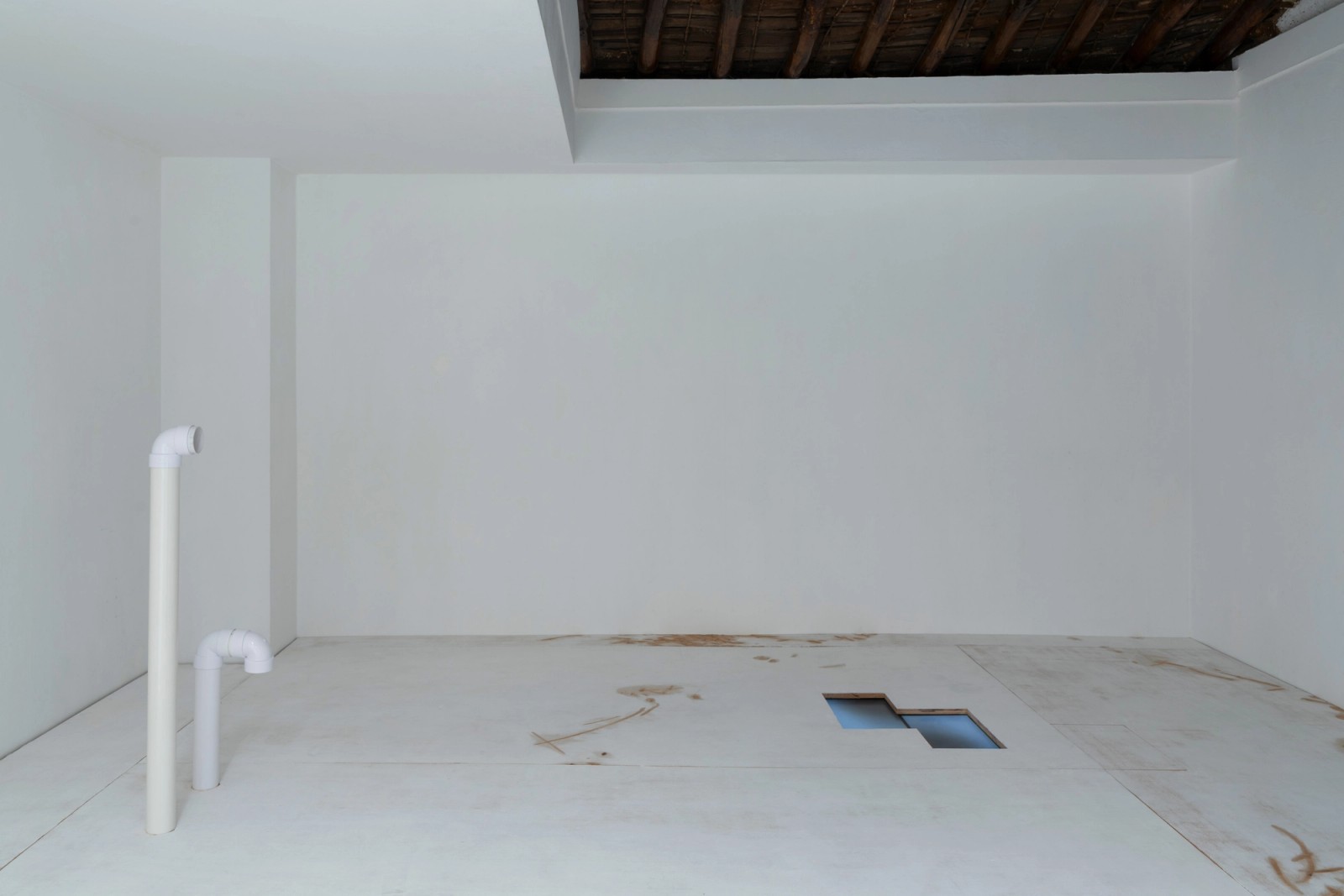

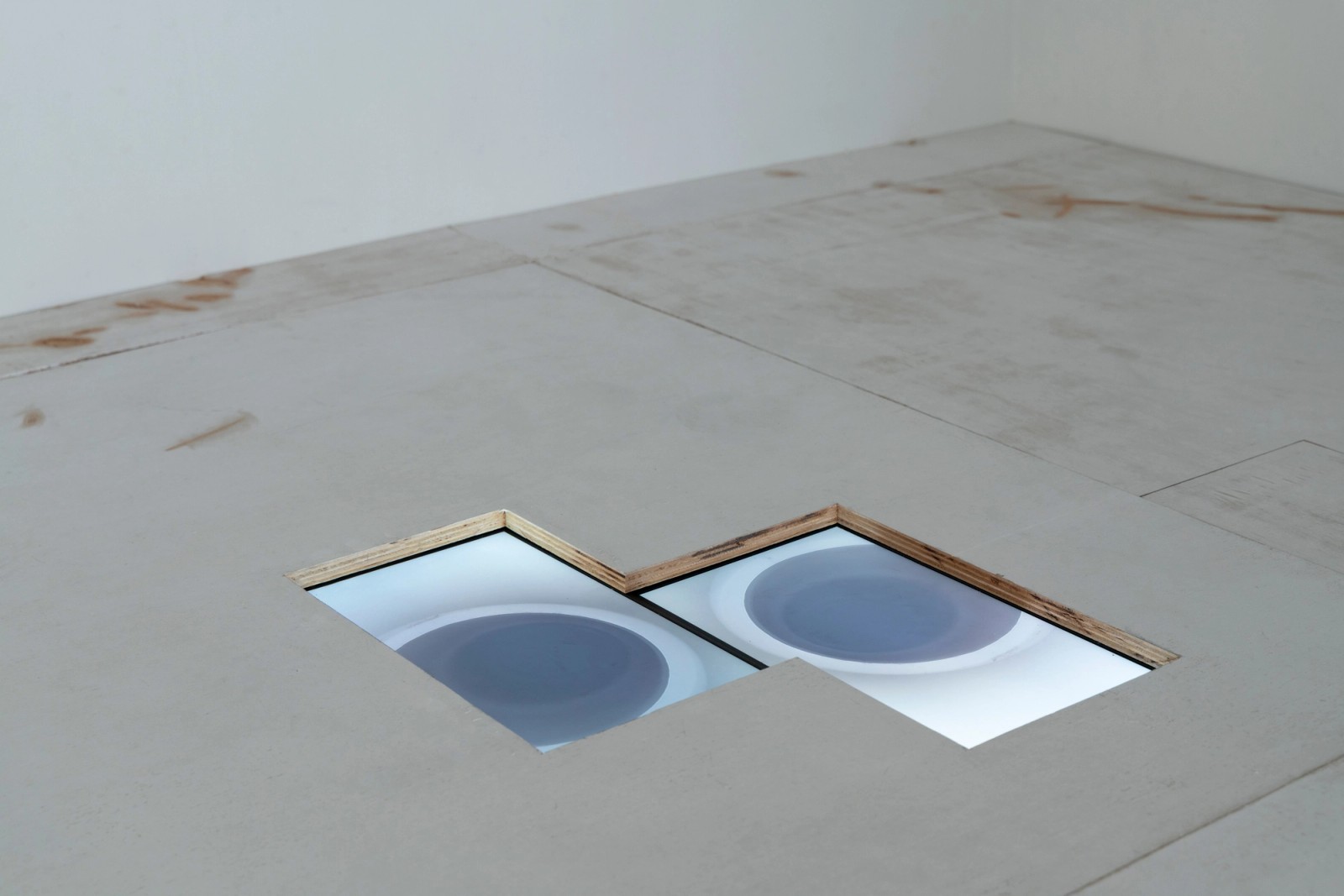

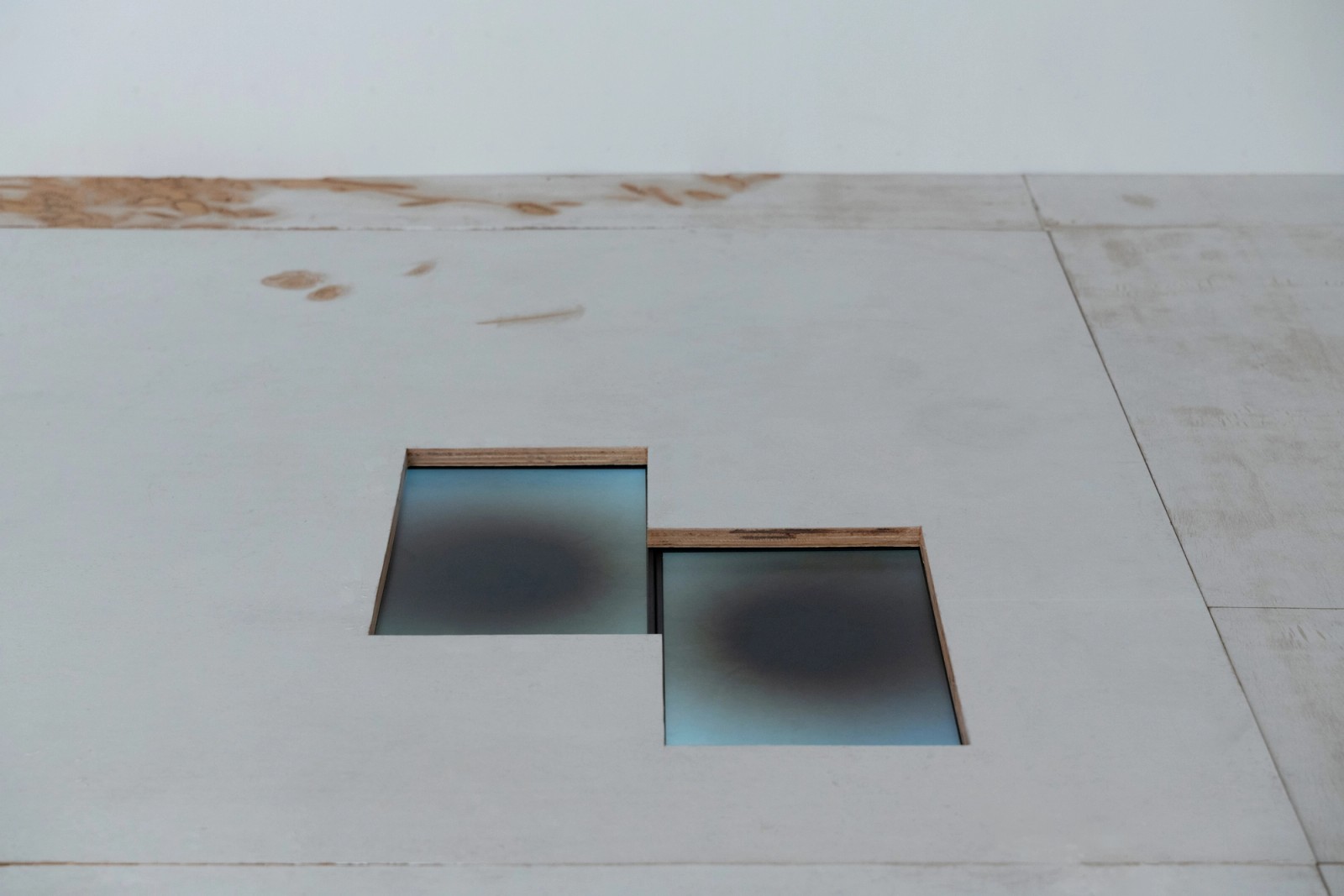

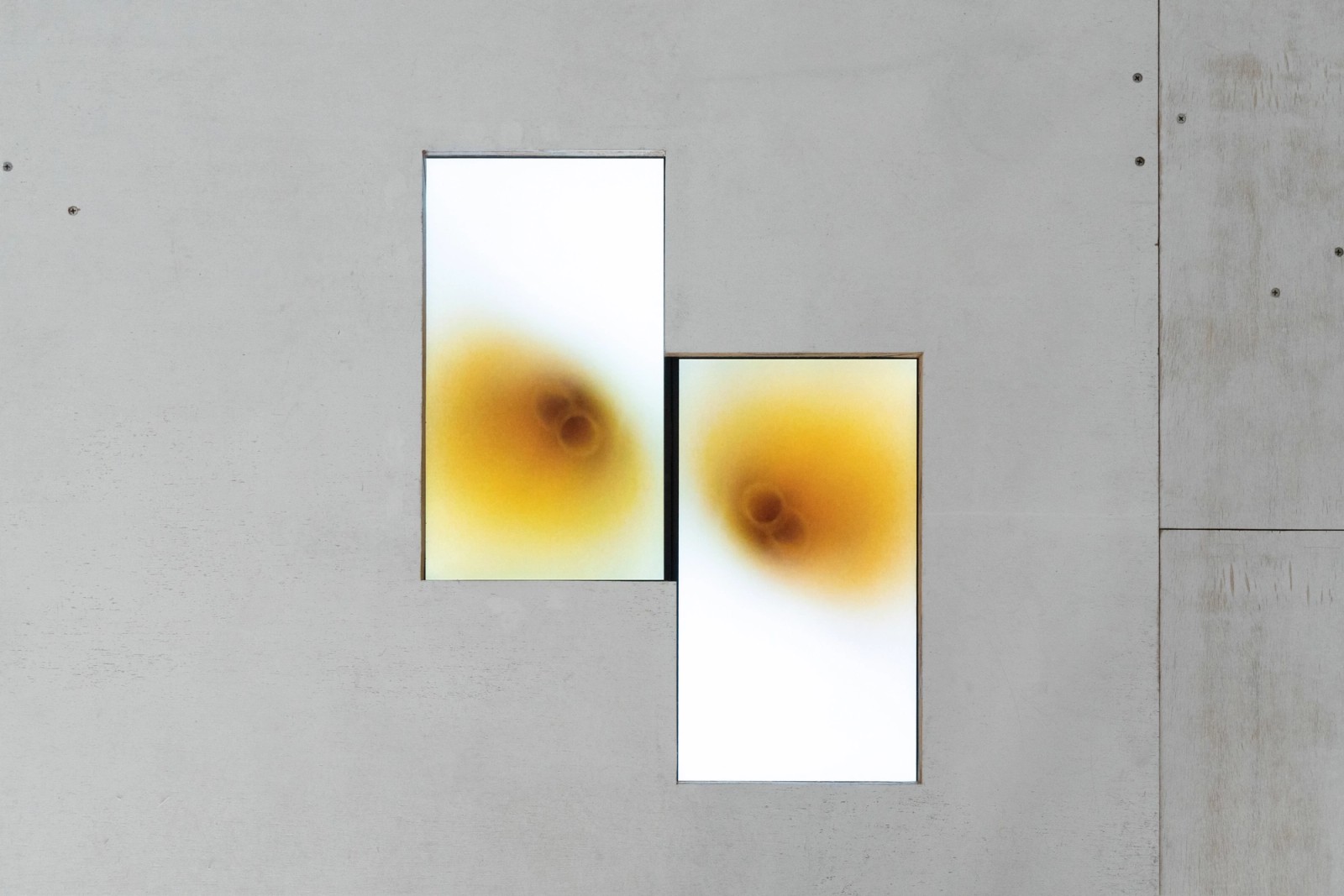

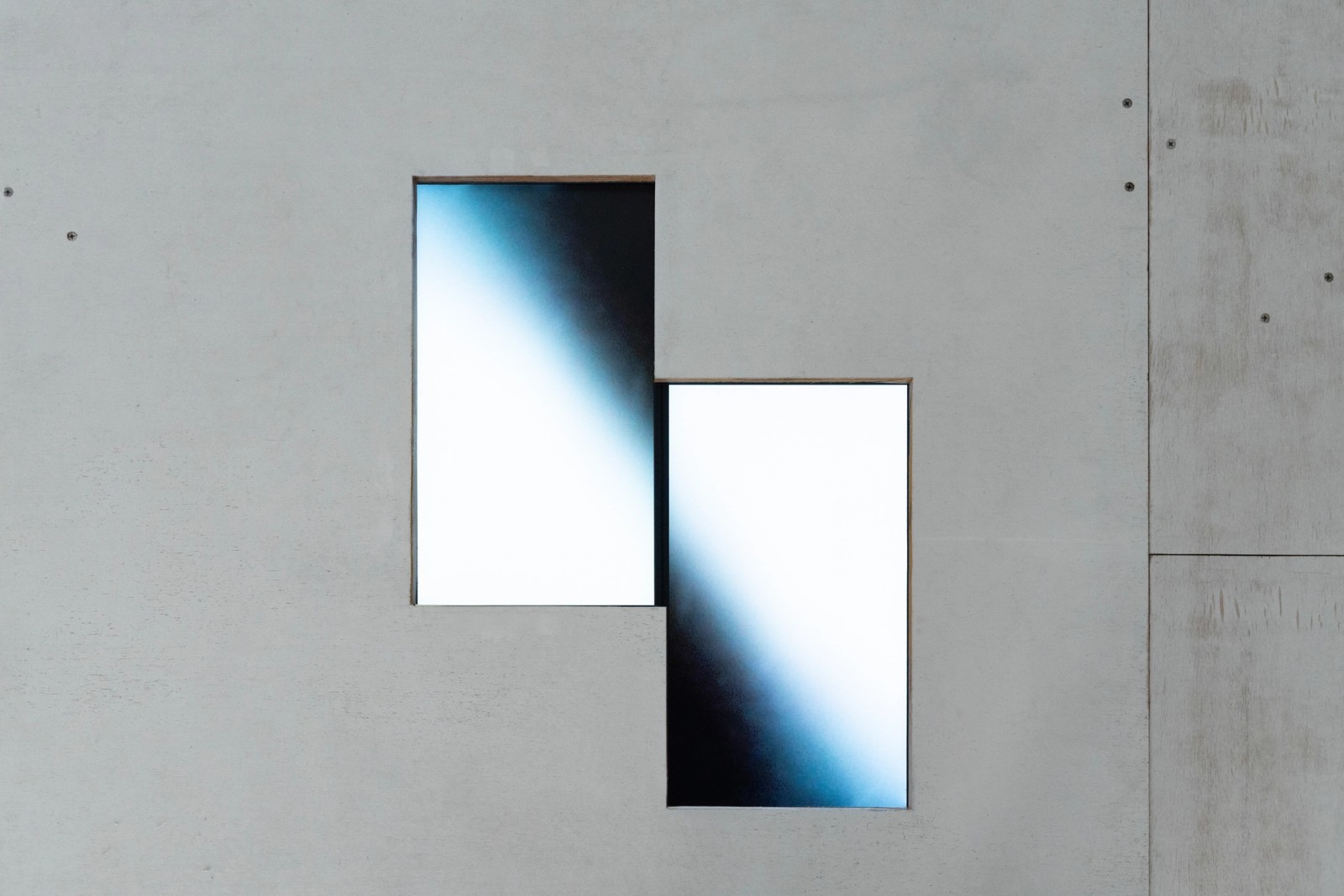

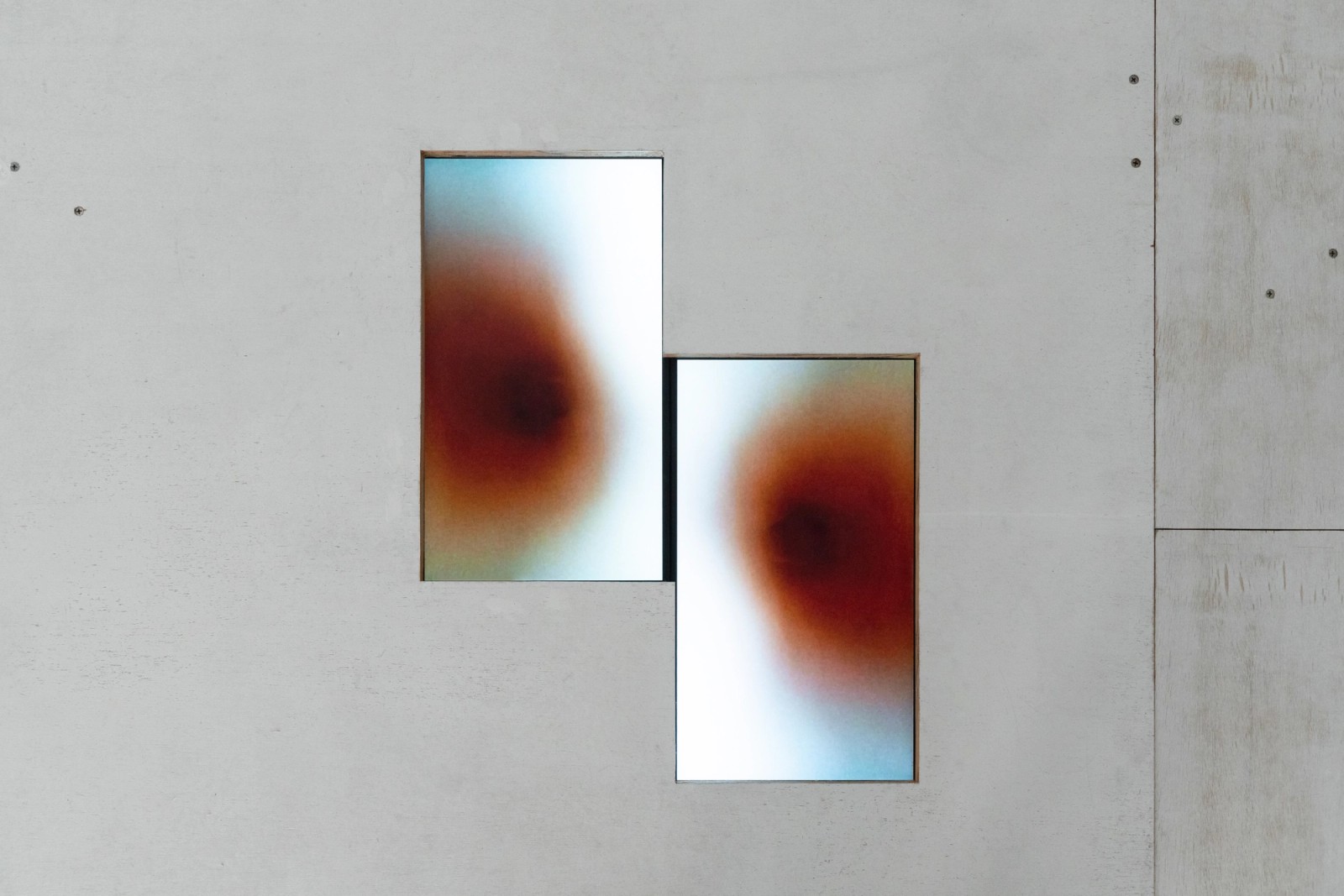

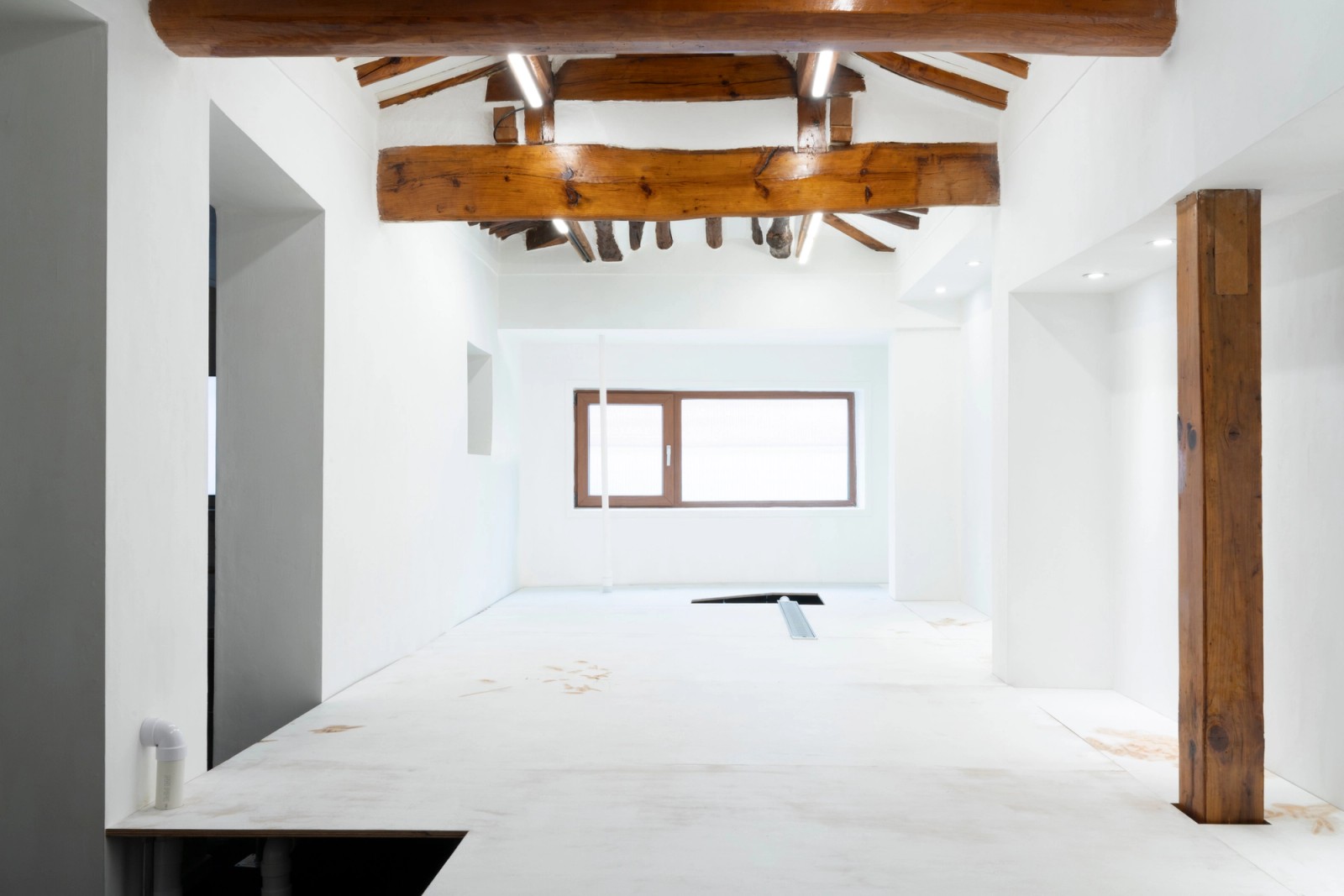

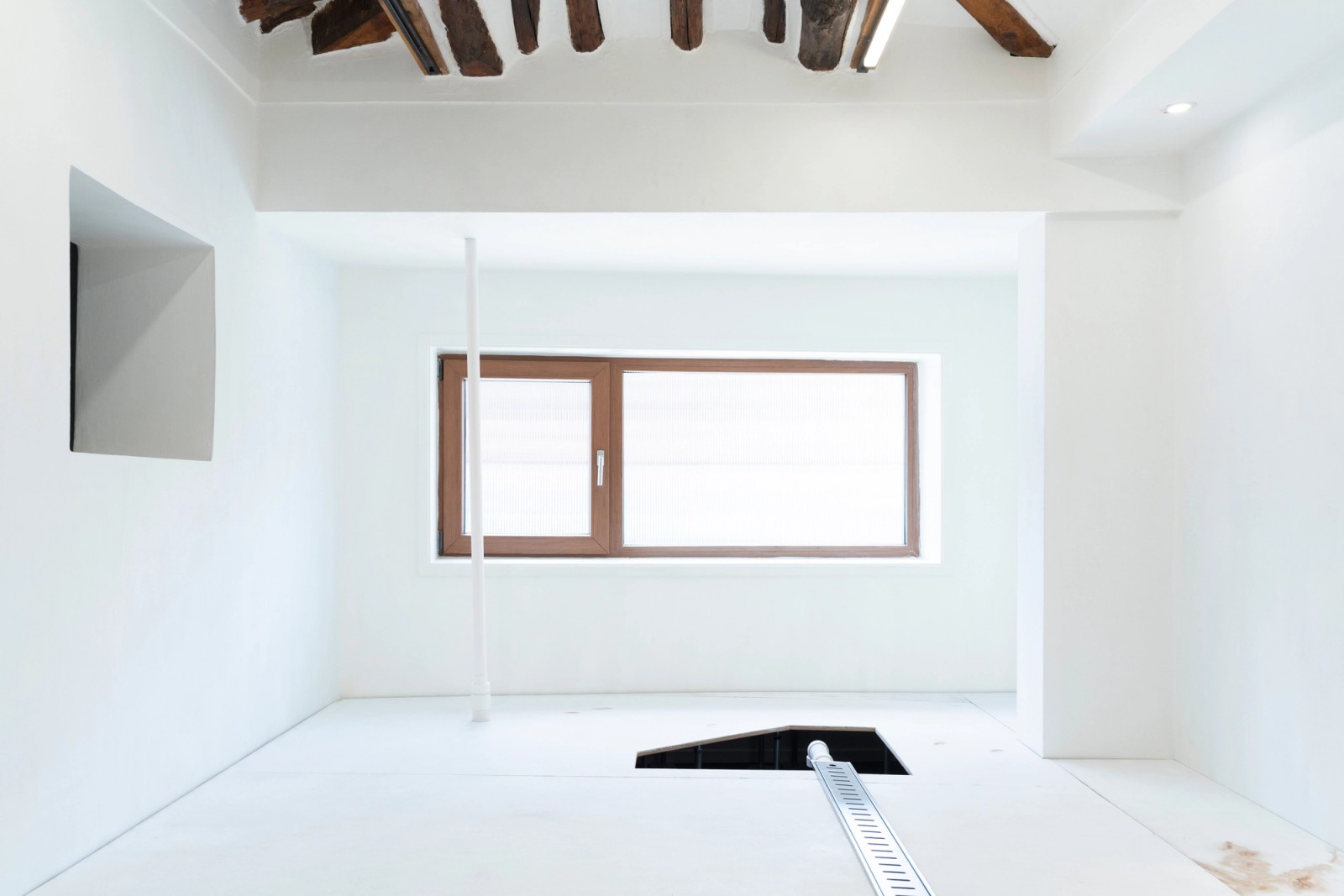

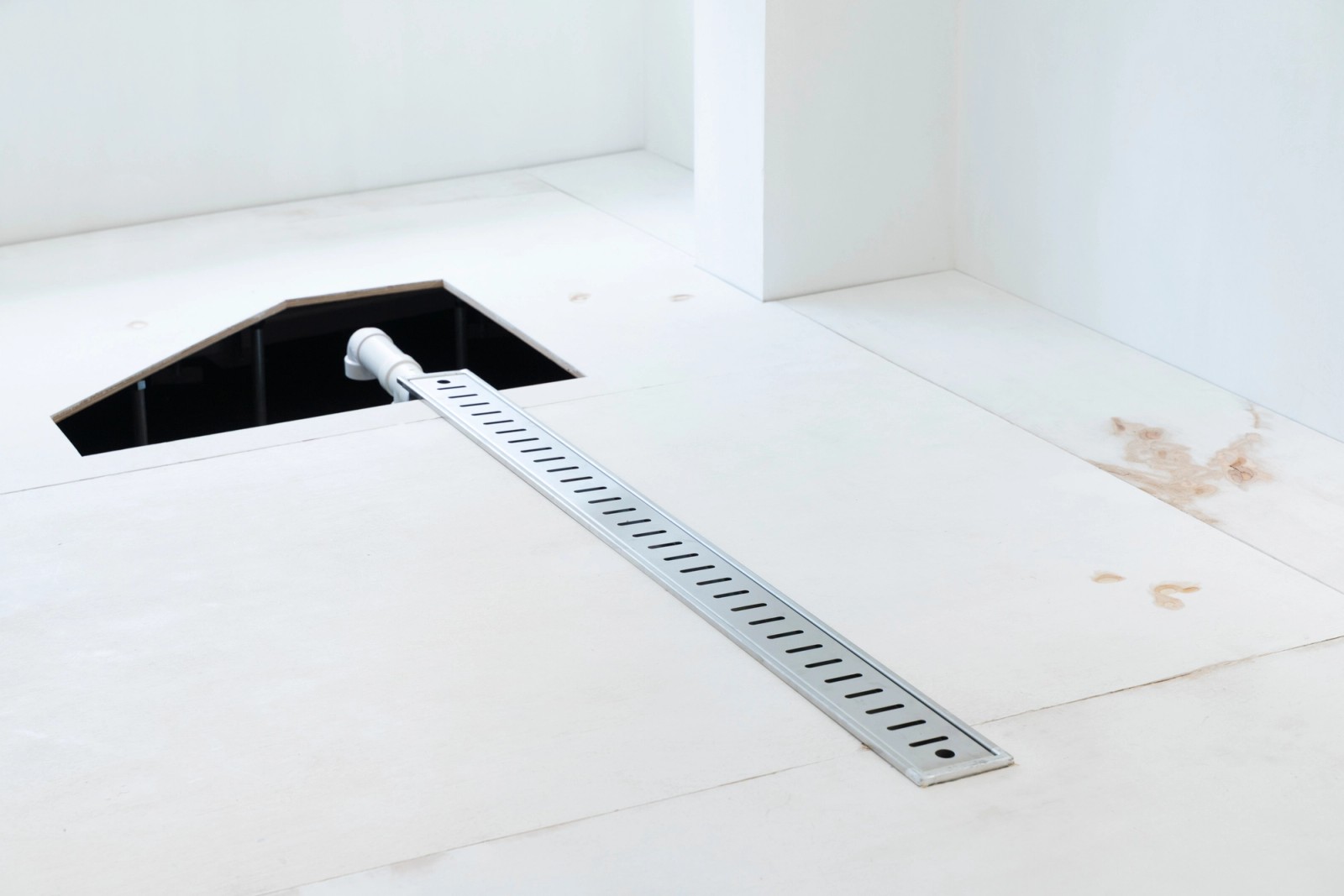

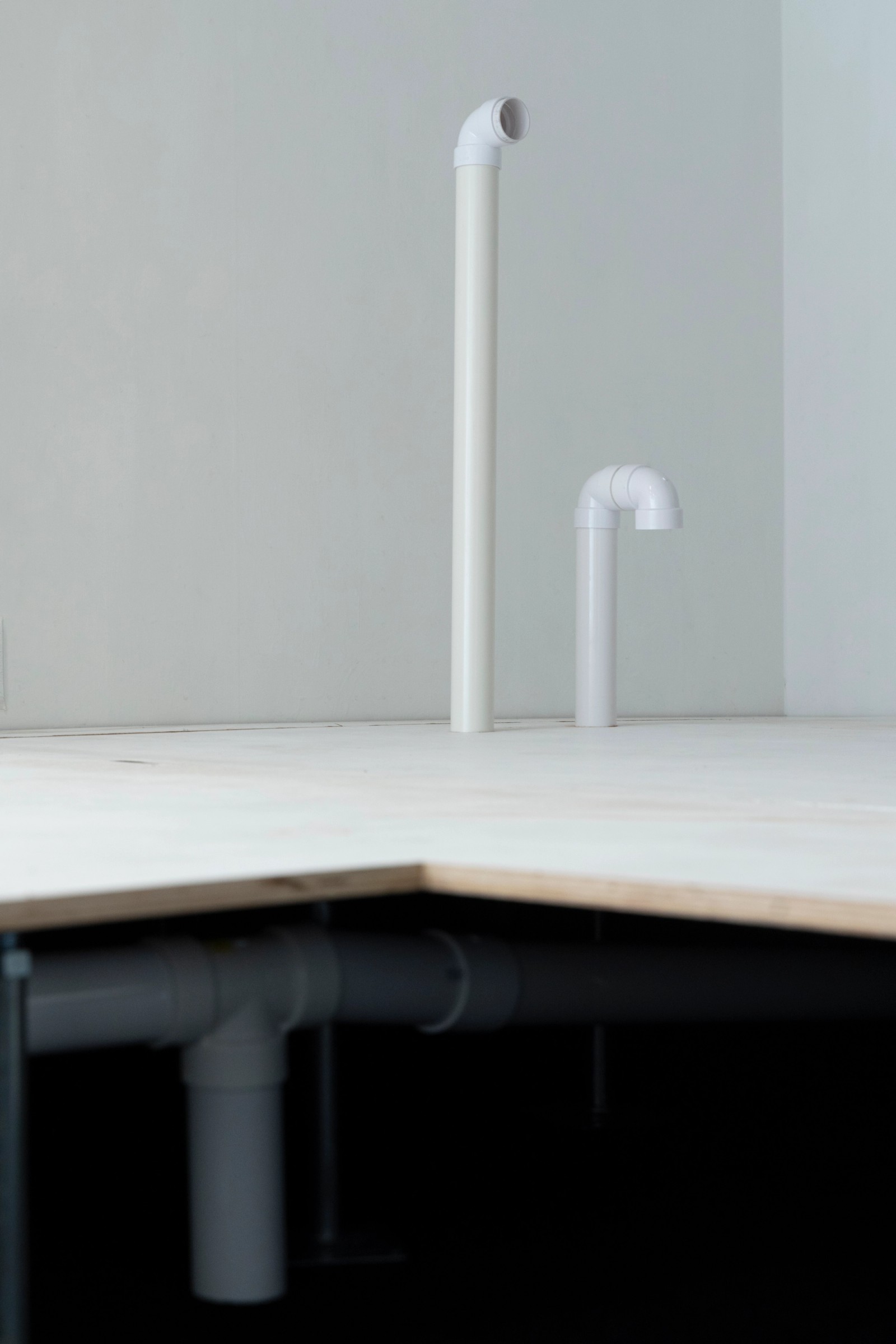

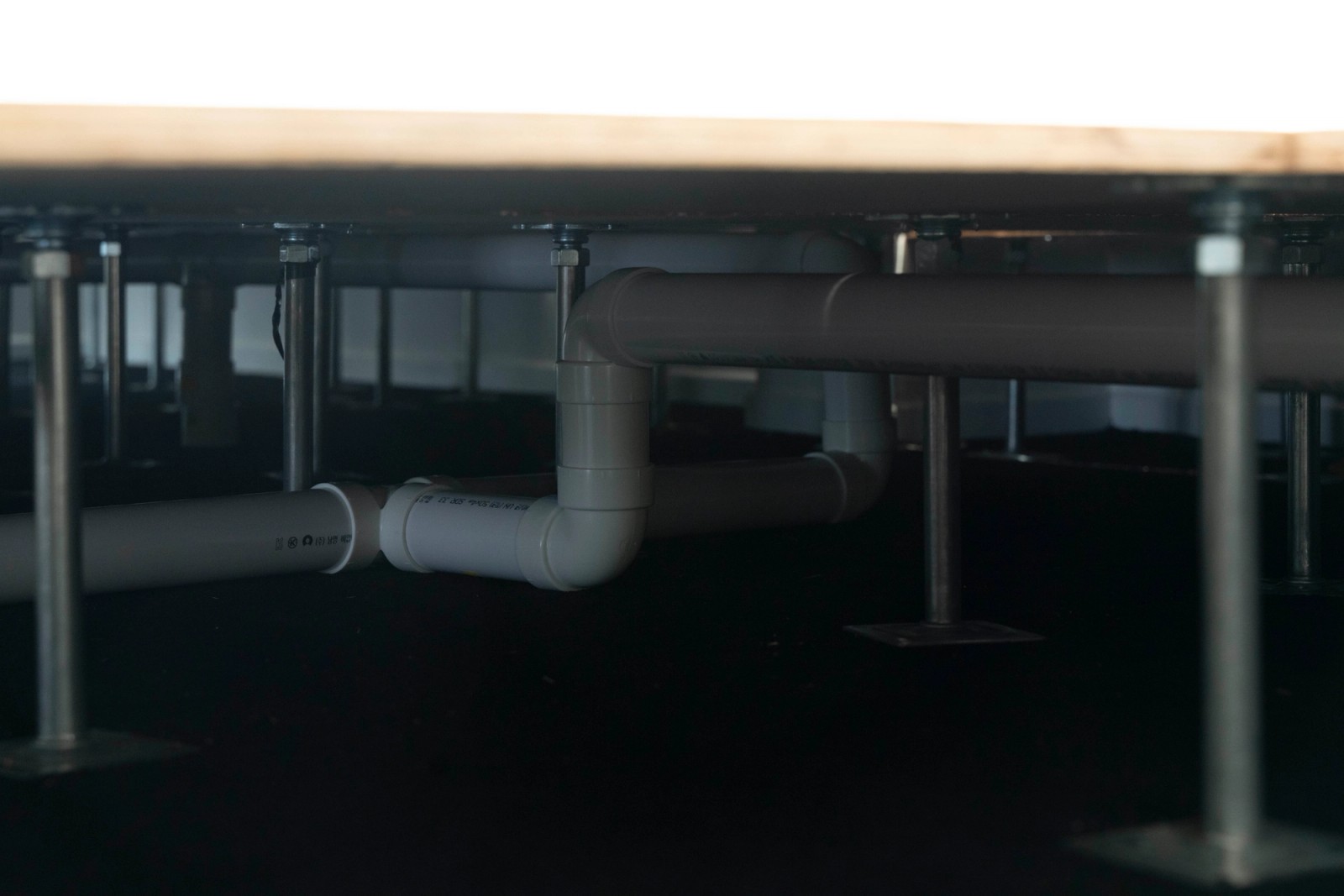
바닥 위에 광학 장치로만 볼 수 있는 풍경 한 쌍이 어긋나게 놓여있다. 두 화면의 어둠 또는 밝음이 겹칠 때, 배관의 내부는 그 속에 있을 수 없는 범위의 이미지로 펼쳐진다. 이 어긋난 풍경의 틈에서 ‘안’이었던 것은 ‘바깥’으로 펼쳐졌다가, 다시 ‘안’으로 접히기를 반복한다. 그때 이곳은 하나의 사건으로 닫히지 않는 수렴과 발산의 루프가 자리한 장소이다. 렌즈를 통해 깊숙이 진입하는 만큼, 대상에 도달할 수 없는 거리감이 지속된다. 배경 소음과 구조적 떨림만을 남긴 채, 가청 영역을 걷어낸 영상의 소리는 진동으로 변환되어 신체를 관통한다. 이 진동은 출처도 방향도 특정할 수 없게 도착한다. 이 거리감이 〈링반데룽〉²의 입구이다.
² 방향감각을 잃어 직진하고 있다고 여기지만 실제로는 같은 자리를 맴도는 일을 일컫는다.
On the floor, a pair of landscapes—visible only through an optical device—are placed out of alignment. When the darkness or brightness of the two images overlaps, the interior of the piping unfolds into an image that exceeds what could physically exist within it. In the gap between these misaligned landscapes, what was once “inside” expands outward, only to fold back “in” again, repeating this movement. At that moment, this site becomes a locus of convergence and divergence that does not close as an event.
The deeper one enters through the lens, the more a sense of distance persists, preventing arrival at the object. The video’s sound, stripped of the audible spectrum and reduced to background noise and structural vibration, is converted into a form of resonance that penetrates the body. This vibration arrives without a traceable source or direction. This distance marks the threshold of <Ringwanderung>².
² A phenomenon in which one believes they are moving straight ahead but, in fact, continues circling the same place.