
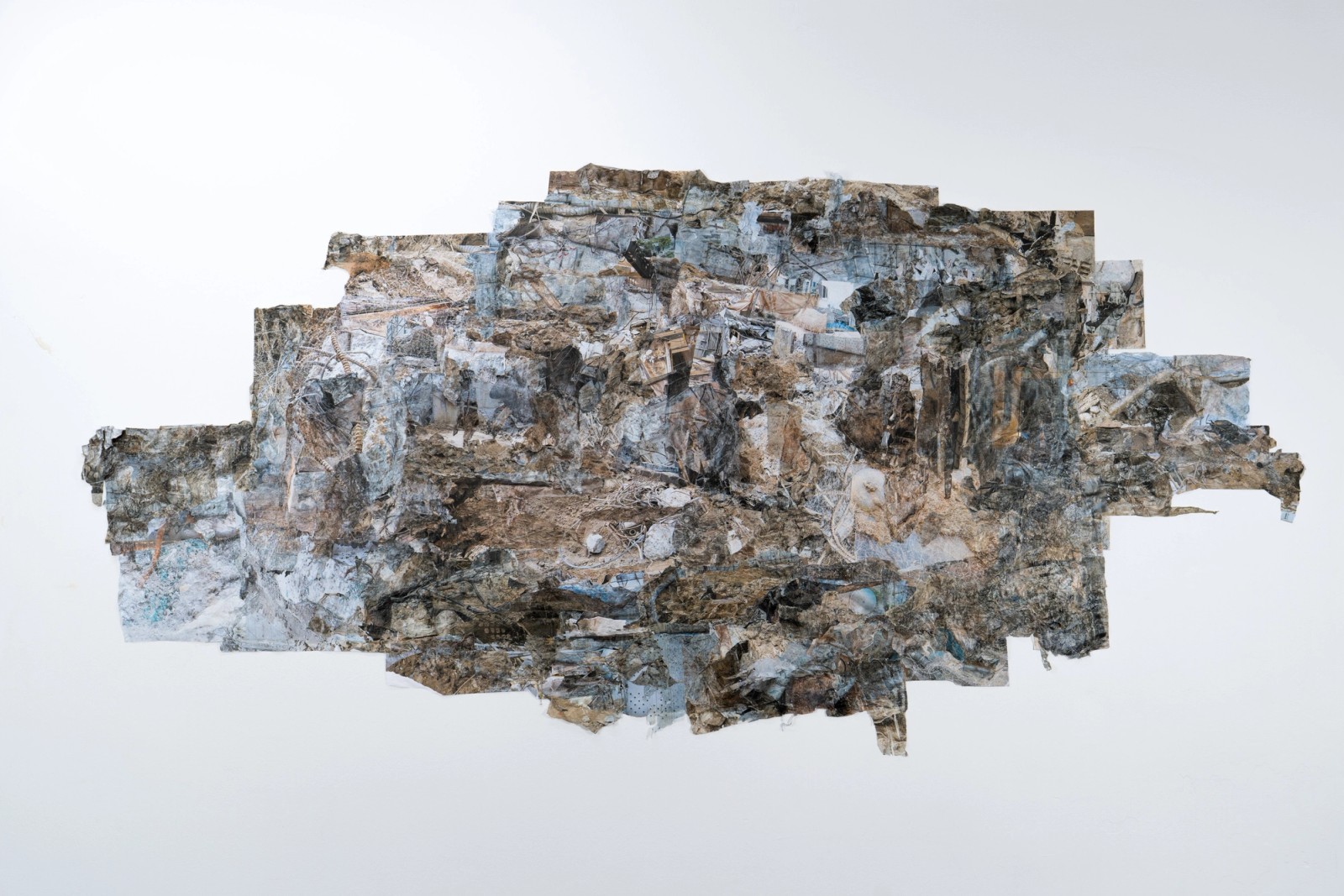

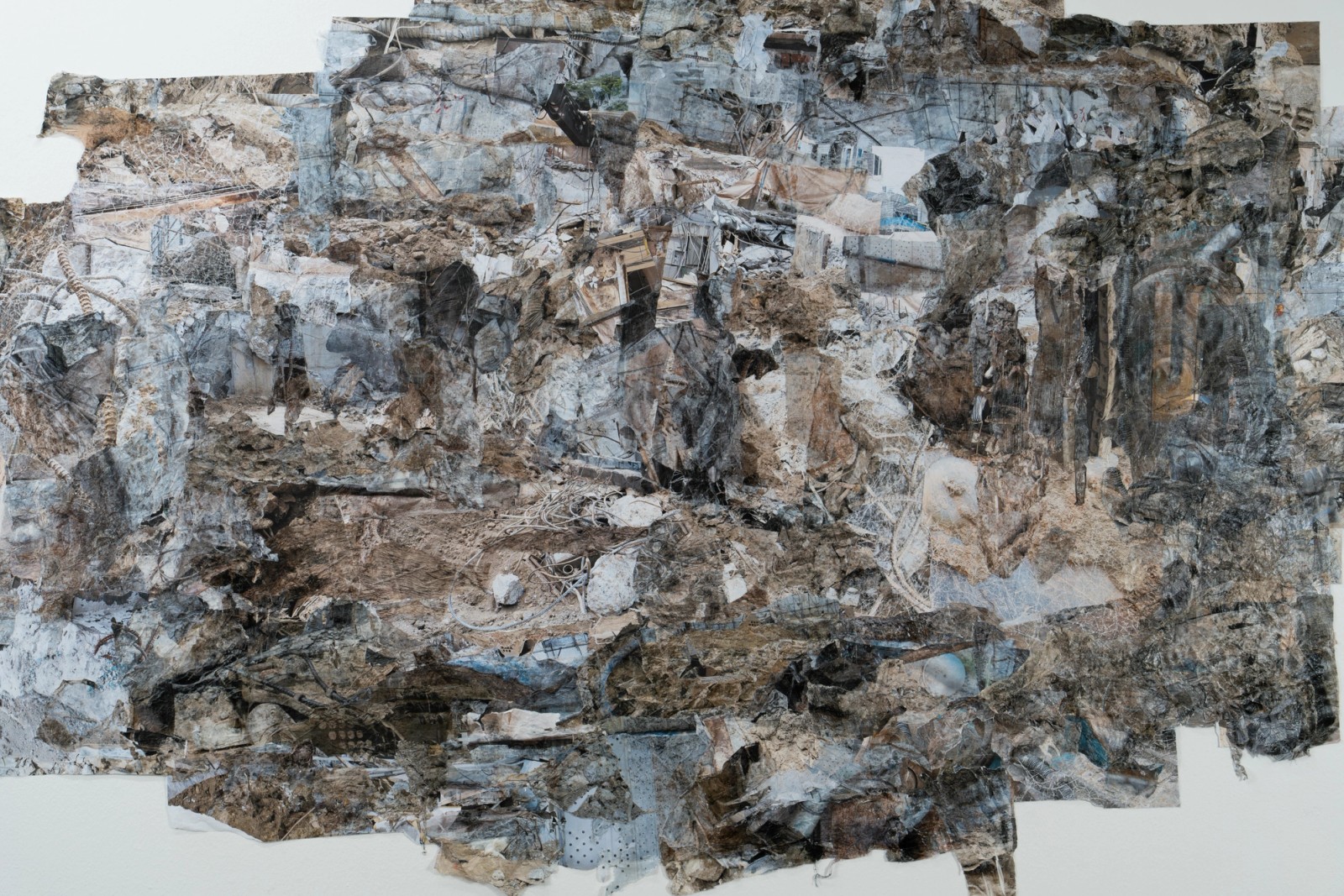


얇은 막 너머의 건설 현장을 풍경으로 바라보는 일은 너무도 익숙한 일상이 되었다. 도시는 이제 실재로서가 아니라 이미지처럼 작동하고, 때로는 그 이미지조차 내용 없는 폐허처럼 다가온다. 이 작업에서 풍경은 마치 이미지처럼 작동하고, 이미지는 다시 폐허처럼 작동하며, 등가의 어떤 것으로 교환된다. 풍경, 이미지, 폐허 - 이 셋은 더 이상 구분되지 않는다. 이 셋은 감각의 차원에서 서로 바꿔치기 되는, 하나의 표면적 체험으로 등가화된다.
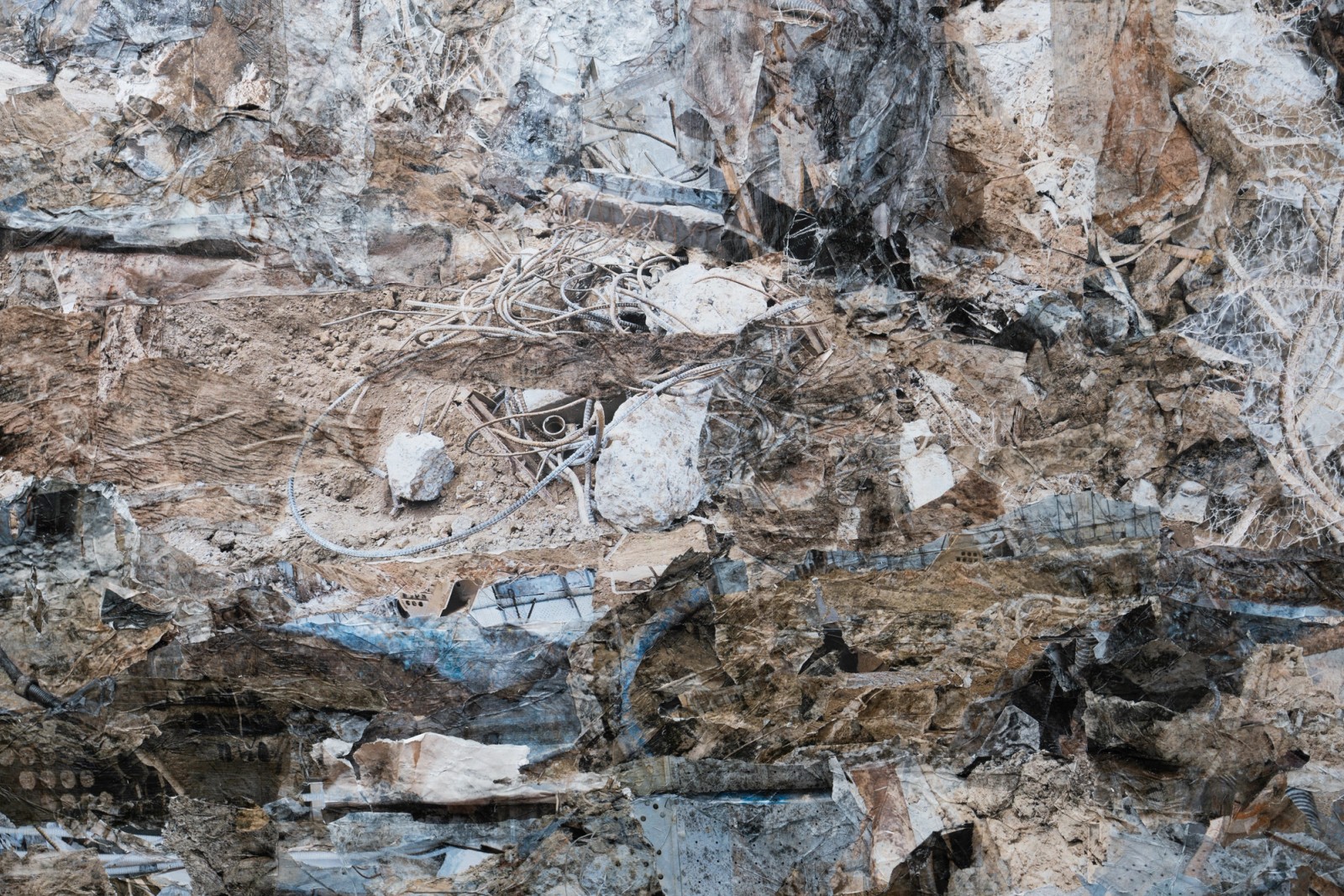
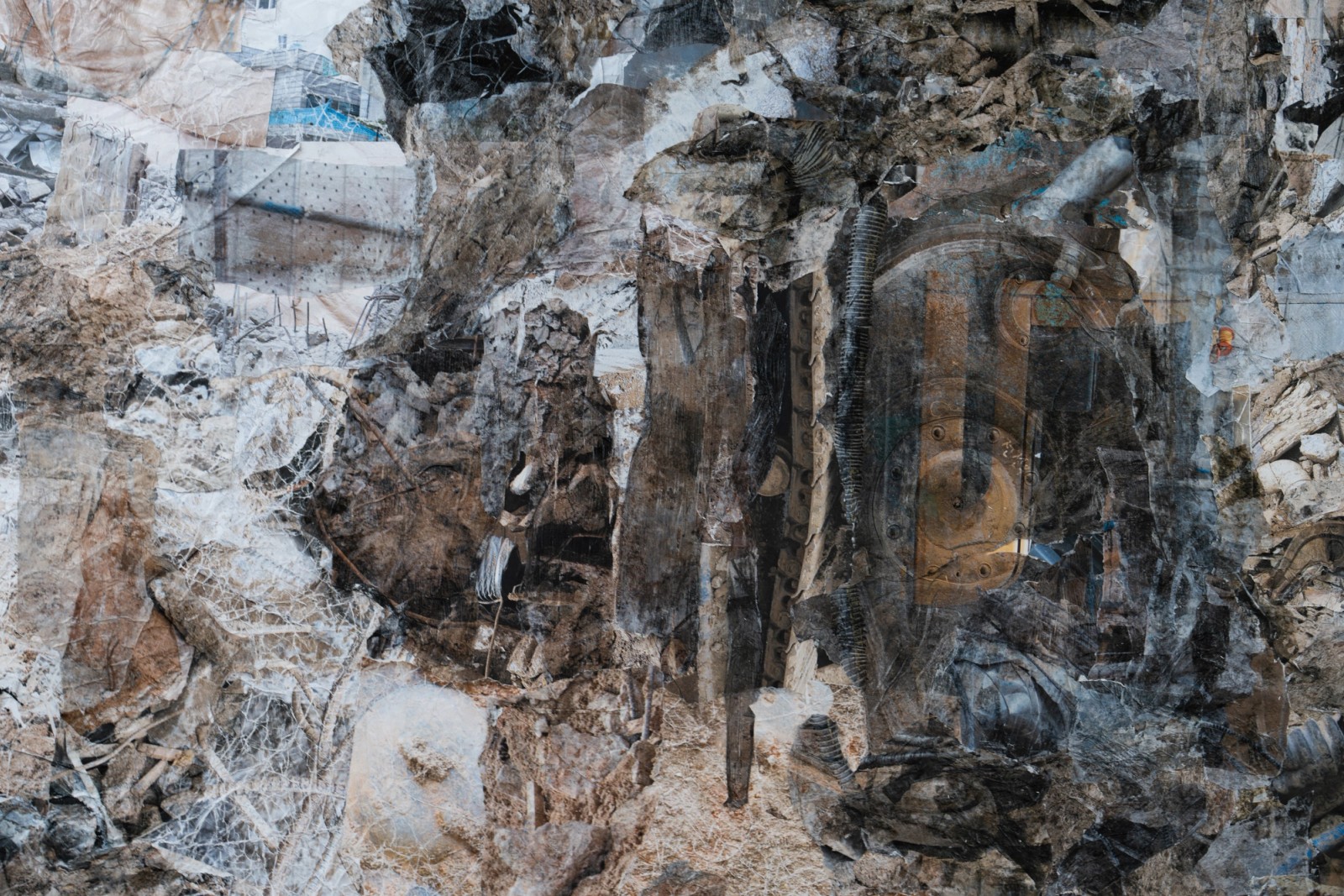
This work serves as a visual record and reconstruction of how the image-based reality of the city is consumed like a ruin. The artist photographs construction sites on the verge of demolition, collapsed walls, and fragments of artificial materials. These images are torn, layered, and collaged into a new kind of ‘landscape.’
But this landscape does not depict reality. It operates like an image that mimics the real, and the image itself behaves like a sensory remnant-hollow, fragmented, and detached. In this work, the distinctions between ruin, image, and landscape are deliberately blurred, flattened into a single surface where they function as equivalents.
The sight of a construction site glimpsed through a thin screen has become an ordinary part of daily life. Urban change is recognized first as image, then consumed again as a sensory fragment. Time, place, material, and trace within the city are thus reduced to a collapsed visual surface. This work begins with a skepticism toward such “familiarity,” aiming to recompose the landscape of reality by defamiliarizing it-through the fragmented, layered pieces of countless images.